First Peoples and Rising Seas: Rewriting Australia’s Deep History
About This Event
This free public lecture by Professor Chris Clarkson explores how and when the first people reached Australia, and how they responded to major environmental change.
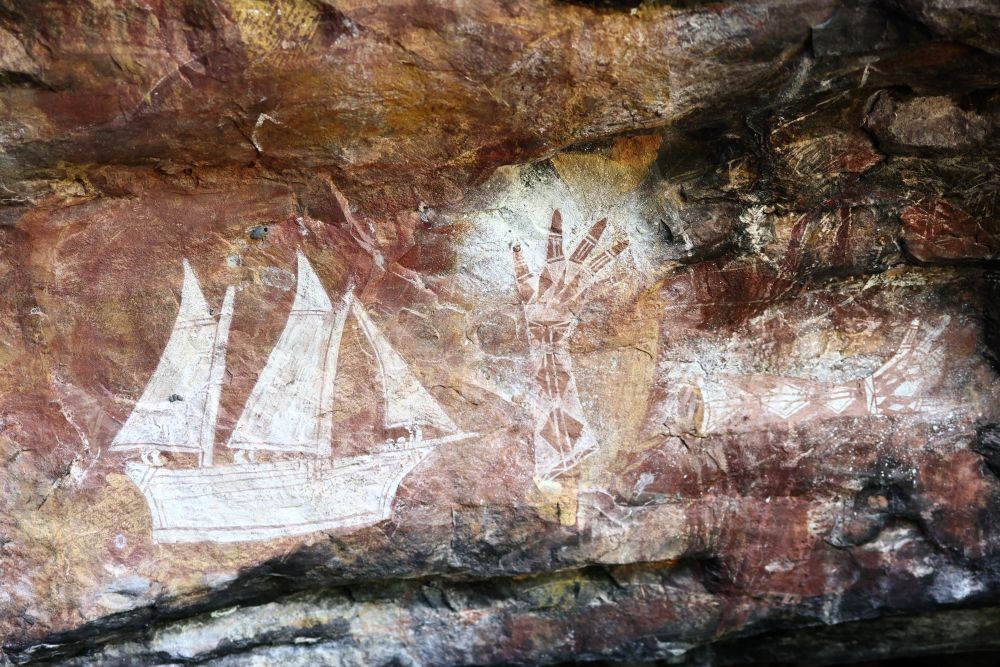
Presented by Rock Art Australia in partnership with the South Australia Museum.Join us on Tuesday the 6th of October for a welcome drink followed by the lecture, "First Peoples and Rising Seas: Rewriting Australia’s Deep History" presented by Professor Chris Clarkson.Professor Chris Clarkson is the Rock Art Australia Chair in Rock Art & Archaeology, Griffith University. He specialises in early modern human dispersal, lithic technology, and the archaeology of Southeast Asia and Australia. His research integrates a range of archaeological sciences to investigate the timing, routes, and adaptations of the first Homo sapiens populations in the Indo-Pacific region. He has led major multidisciplinary projects across Australia and Indonesia in collaboration with Traditional Owners and international partners.He is best known for leading the research at Madjedbebe that established human occupation of Australia by ~65,000 years ago, a finding that transformed global models of human dispersal out of Africa. His current work focuses on the effects of post-glacial sea-level rise on human societies in northern Australia and on human origins in Southeast Asia. Clarkson’s research has been published in leading journals including Nature, Science, and PNAS, and is supported by multiple Australian Research Council fellowships.Northern Australia, particularly Arnhem Land, preserves some of the richest rock art and longest archaeological records in the country. Sites such as Madjedbebe demonstrate human occupation by at least 65,000 years ago, providing a critical benchmark for understanding global human dispersal.The landscapes these early populations inhabited were very different from today. During the last Ice Age (22-18,000 years ago), lower sea levels exposed a vast continental shelf linking northern Australia to New Guinea and extending toward Southeast Asia. As the climate warmed, rapid sea-level rise flooded this landscape, transforming coastlines over relatively short timescales. These changes likely reshaped population distribution, economies, technologies, and rock art traditions.Current research in western Arnhem Land, supported by Rock Art Australia and conducted in partnership with Manilakarr Traditional Owners, Njanjma Rangers and the Northern Land Council, investigates how people adapted to these shifting environments using archaeological, environmental, and rock art evidence. The project is co-designed with Manilakarr Traditional Owners and contributes directly to their Healthy Country Plan through heritage documentation, ranger training, and development of long-term management strategies.
Event Gallery
Location
Location Not Available
South Australian Museum
North Terrace, Adelaide, SA, 5000